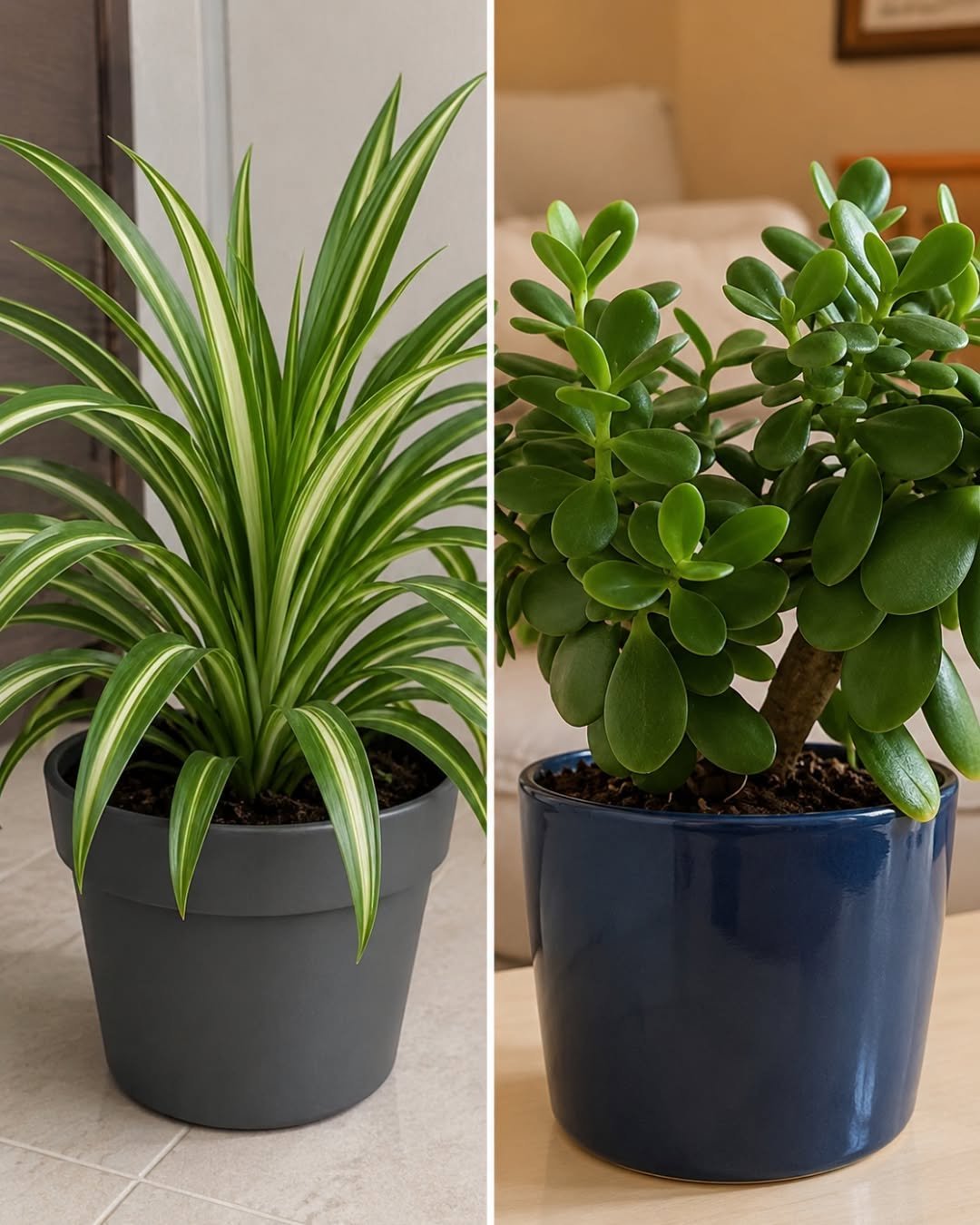
<italic>Chlorophytum comosum</italic>, commonly called the spider plant, is another excellent choice for bringing greenery indoors.
Its long, narrow leaves curve gracefully outward, often featuring green and white stripes. As the plant matures, it produces long stems with small baby plants, giving it a distinctive cascading appearance.
These little offshoots are one of its most charming features. You can leave them attached for a fuller display or use them to grow new spider plants.
Spider plants have also been studied for their ability to absorb certain airborne compounds, including formaldehyde and benzene, under controlled conditions.
They’re attractive, adaptable, and generally easy to maintain, even if you’re new to indoor gardening.
Where Does a Spider Plant Grow Best?
Spider plants look particularly lovely in hanging baskets, on shelves, or near a bright window where their leaves can spread naturally.
For healthy growth:
- Give the plant bright, indirect light.
- Avoid prolonged exposure to harsh direct sunlight.
- Water when the top layer of soil begins to dry.
- Make sure the pot drains properly.
- Remove dry or damaged leaves when needed.
- Repot when the roots become crowded.
Another reason many families love spider plants is that they’re generally considered non-toxic to cats and dogs, according to the ASPCA.
However, curious pets may still chew on the leaves and damage the plant, so it’s worth keeping it somewhere suitable.
Can Houseplants Really Purify the Air in Your Home?
This is where things get interesting.
You may have seen claims that certain houseplants can remove toxins from indoor air. Some of those claims come from laboratory studies showing that plants can absorb particular airborne chemicals under controlled conditions.
But there’s an important difference between a sealed laboratory chamber and a real home.
In everyday living spaces, air moves constantly, pollutants come from different sources, and the amount of purification provided by a few houseplants is generally too small to make a meaningful difference to overall indoor air quality.
So, should you still bring plants into your home?
Absolutely. Just think of them as a beautiful addition to your living space rather than a replacement for proper ventilation.
For a healthier indoor environment, combine your plants with a few simple habits:
- Open your windows regularly: Allow fresh outdoor air to circulate when weather and outdoor air quality permit.
- Maintain your ventilation system: Keep exhaust fans and ventilation equipment clean and working properly.
- Choose cleaning products carefully: Avoid unnecessary use of heavily fragranced products.
- Keep indoor spaces smoke-free: Avoid smoking indoors.
- Control moisture: Address leaks and damp areas promptly to help prevent mold growth.
These practical steps are much more important for maintaining good indoor air quality than relying on houseplants alone.
Which of These 3 Plants Is Right for Your Home?
Each of these plants has something different to offer.
- Snake plant: A great choice if you want an upright, stylish plant that needs very little watering.
- Pothos: Perfect for shelves and hanging baskets, especially if you love trailing greenery.
- Spider plant: A lovely option if you want an easy-care plant that produces baby plants you can grow and share.
Before choosing, consider how much natural light your room receives, how often you want to water your plants, and whether you have pets at home.
A little planning can help you choose a plant that will thrive rather than struggle in the wrong spot.
Bring a Little More Green Into Your Everyday Life
You don’t need a house full of plants to make your home feel more welcoming. Even one beautiful snake plant in the living room or a trailing pothos on a bookshelf can change the atmosphere of a space.
The snake plant, pothos, and spider plant are all attractive options that are relatively easy to care for. They’ve also been studied for their ability to absorb certain airborne compounds, although they shouldn’t be relied upon to clean the air in an entire home.
Start with one that suits your space, give it the right care, and enjoy the simple pleasure of having a little more nature around you.
**Now we’d love to hear from you: Which of these three houseplants would you choose for your home? Do you already have one, or is there another indoor plant you absolutely love? Share
For Complete Cooking STEPS Please Head On Over To Next Page Or Open button (>)