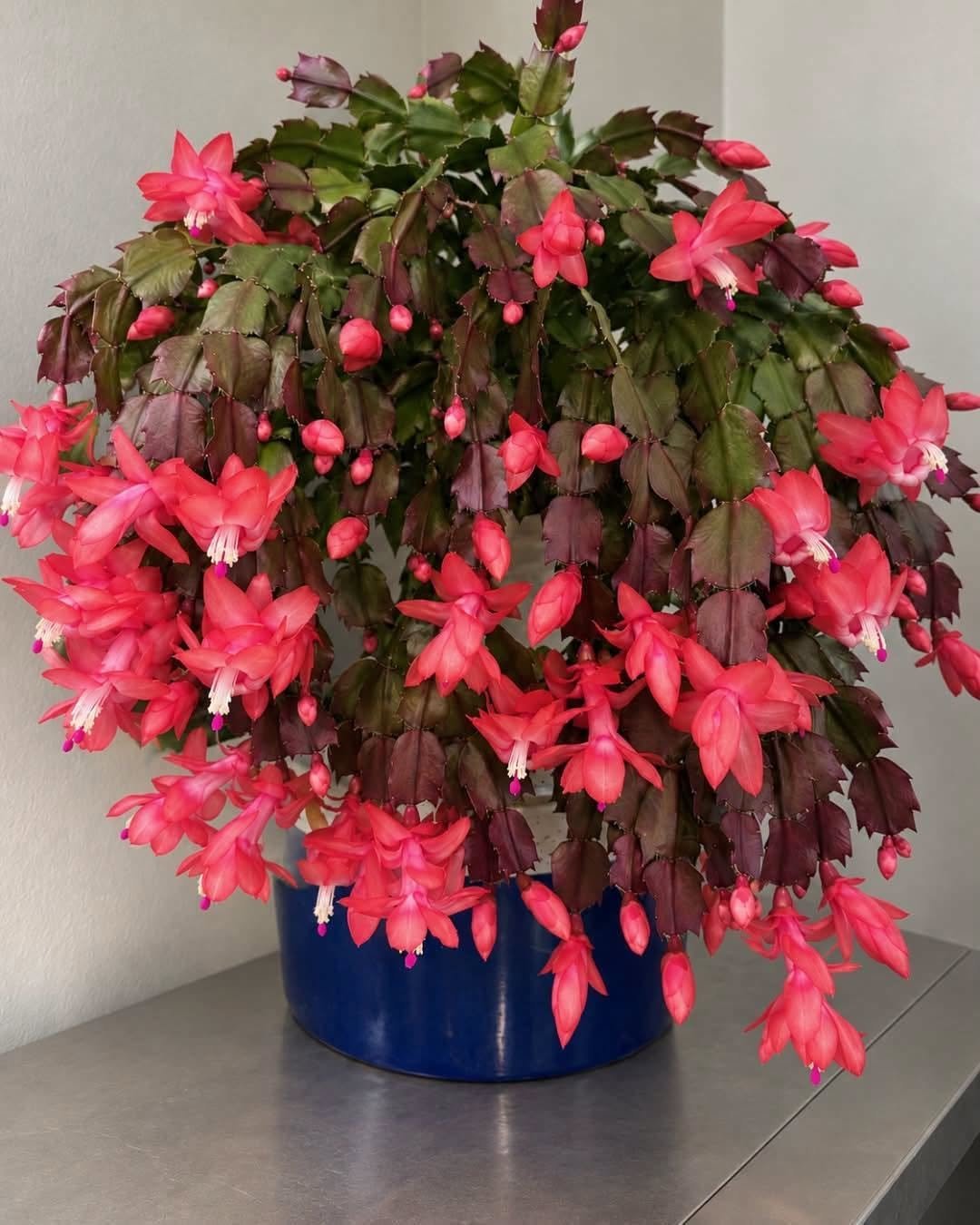
When winter arrives and most outdoor gardens look quiet and bare, one houseplant can bring a beautiful burst of color indoors: the Christmas cactus.
With its graceful, arching stems and vibrant flowers in shades of pink, red, white, and purple, this popular holiday plant has a way of making any room feel warmer and more inviting.
But here’s something many plant owners discover after bringing one home: keeping a Christmas cactus alive is relatively easy, but getting it to bloom again can be a little more challenging.
You might notice that your plant keeps producing new green segments but never develops flower buds. Or perhaps it bloomed beautifully last winter, only to remain completely flowerless this year.
The good news is that Christmas cacti don’t need complicated care. Light, watering, temperature, and the length of nighttime darkness all play an important role in their flowering cycle.
With a few simple adjustments, you can encourage your plant to produce beautiful blooms season after season.
Here’s how to help your Christmas cactus thrive and get ready for its next spectacular display.
1. Give Your Christmas Cactus the Right Amount of Light
Light is one of the most important factors in keeping a Christmas cactus healthy.
Unlike desert cacti that enjoy plenty of direct sunshine, the Christmas cactus naturally grows in shaded environments. It prefers bright, indirect light rather than harsh sunlight.
A spot near an east-facing window is often a good choice. It can receive gentle morning sunlight without being exposed to the strongest afternoon rays.
Too much direct sunlight can cause the flat green segments to become pale, reddish, or damaged.
How to provide the right lighting:
- Place your plant near a bright window with filtered light.
- Avoid prolonged exposure to intense direct sunlight.
- Keep it away from very dark corners where growth may become weak.
- Rotate the pot occasionally during the growing season to encourage balanced growth.
The goal is to provide enough natural light for healthy growth without exposing the plant to excessive heat or direct sun.
2. Water Carefully to Keep the Roots Healthy
Watering is another area where many Christmas cactus owners make mistakes.
Although this plant enjoys more moisture than a typical desert cactus, it doesn’t like sitting in soggy soil. Too much water can lead to root rot, especially when temperatures are cooler and the soil takes longer to dry.
During spring and summer, water when the upper portion of the potting mix begins to dry.
As autumn and winter arrive, adjust your watering schedule according to the plant’s needs, indoor temperature, and how quickly the soil dries.
Simple watering tips:
- Check the soil before watering rather than following a strict calendar.
- Water thoroughly when needed, allowing excess water to drain from the bottom.
- Empty the saucer so the roots never sit in standing water.
- Use a pot with drainage holes.
- Reduce watering when growth slows and the soil stays moist for longer.
A well-draining potting mix is especially important. A suitable cactus or succulent mix designed for tropical plants can help prevent excess moisture from collecting around the roots.
Remember: slightly dry soil is usually easier for a Christmas cactus to handle than constantly wet roots.
3. Maintain a Comfortable Temperature
Christmas cacti generally grow well in normal indoor temperatures, making them relatively easy to keep in homes.
During their active growing season, temperatures around 65–70°F (18–21°C) are generally suitable.
However, temperature becomes particularly important when the plant is preparing to flower.
Cooler nighttime conditions can help encourage bud formation, especially when combined with longer periods of darkness.
Try to keep your plant away from:
- Heating vents and radiators.
- Fireplaces and wood-burning stoves.
- Cold drafts near frequently opened doors.
- Sudden temperature changes.
- Very hot windows during sunny afternoons.
Christmas cacti also appreciate moderate humidity. If your home becomes particularly dry during winter, placing the plant near other houseplants can help create a slightly more humid environment.
Just make sure the pot has proper drainage and never sits in water.
4. Encourage Flowering With Longer, Cooler Nights
This is probably the most important trick if your Christmas cactus produces plenty of green growth but refuses to bloom.
Christmas cacti are short-day plants. This means they respond to shorter days and longer, uninterrupted periods of darkness when preparing to produce flower buds.
In autumn, your plant needs several weeks of suitable nighttime conditions to begin its flowering cycle.
A helpful approach is to provide:
- Approximately 12–14 hours of uninterrupted darkness each night.
- Cooler nighttime temperatures, ideally around 50–59°F (10–15°C), when the plant can safely tolerate them.
- Bright, indirect light during the daytime.
- Consistent conditions without frequent changes.
One detail that often gets overlooked is artificial lighting.
If your Christmas cactus sits in a room where lights remain on late into the evening, the extra light can interfere with the long nighttime darkness it needs to form buds.
You can move it to a naturally dark room or cover it with a breathable, light-blocking cover during the required nighttime period, making sure the plant still receives adequate daytime light.
Once flower buds begin appearing, avoid moving the plant unnecessarily. Sudden changes in light, temperature, or watering can sometimes cause developing buds to drop.
5. Propagate Your Christmas Cactus and Grow New Plants
For Complete Cooking STEPS Please Head On Over To Next Page Or Open button (>)