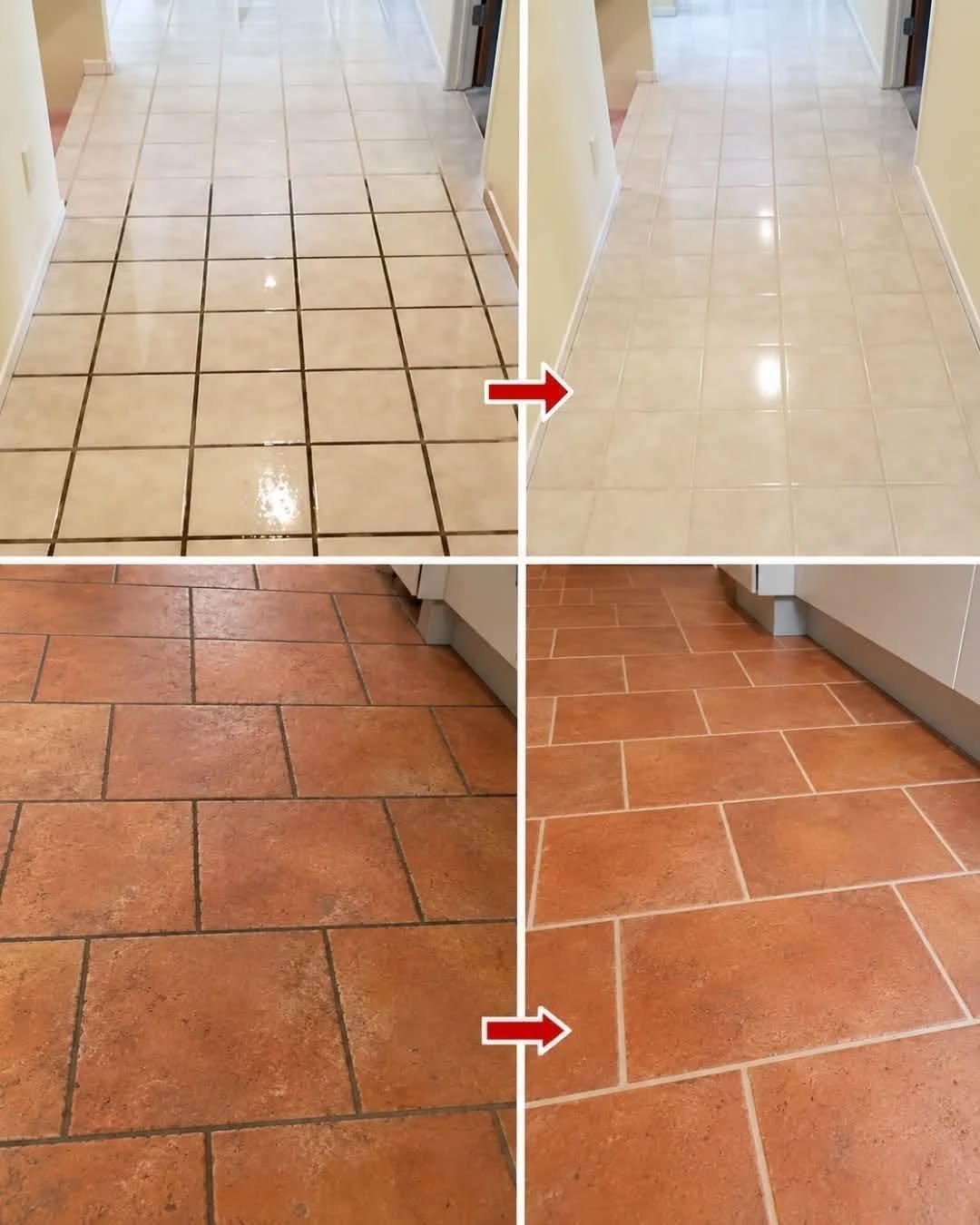
White vinegar is a familiar household cleaning ingredient, particularly when it comes to certain mineral deposits and hard-water residue.
However, this is one method where you need to be especially careful.
Because vinegar is acidic, it can damage acid-sensitive materials such as marble, limestone, and other natural stones. Repeated exposure may also affect certain grout materials and finishes.
Before using vinegar anywhere on your floor, check the tile and grout manufacturer’s care instructions.
If your flooring is made from natural stone, or you’re unsure what type of material you have, skip the vinegar and choose a cleaner specifically formulated for your surface.
Never mix white vinegar with bleach. This combination can release toxic chlorine gas. You should also avoid mixing different cleaning products together, as unexpected chemical reactions can occur.
Why Your Grout Keeps Getting Dirty
Cleaning dirty grout is one thing. Keeping it clean is another.
If your grout seems to turn dark again just days after cleaning, the problem may be related to everyday habits rather than the cleaning method itself.
A few small changes can help:
- Clean regularly: Don’t wait until dirt becomes deeply embedded in the grout.
- Remove spills quickly: Grease, food, and soap residue can gradually build up.
- Dry damp areas: Standing moisture can contribute to staining and other problems.
- Improve bathroom ventilation: Use an exhaust fan or open a window when possible to help reduce excess humidity.
- Use suitable floor cleaners: Choose products that are compatible with your tile and grout.
You may also want to check whether your grout needs sealing. Some types of grout benefit from a suitable grout sealer, which can help reduce moisture and stain absorption. Always follow the manufacturer’s recommendations before applying one.
When Cleaning Isn’t Enough
There is an important difference between dirty grout and damaged grout.
If the grout remains dark despite careful cleaning, begins to crumble, or develops recurring signs of mold, simply trying stronger products may not solve the underlying problem.
Persistent discoloration can sometimes indicate moisture issues, deteriorating grout, or a problem beneath the tile surface.
In those situations, it’s worth identifying the cause before applying more cleaning products. Damaged grout may need professional attention or replacement.
A Cleaner Floor Starts With the Right Approach
You don’t always need an expensive cleaning solution to improve the appearance of your tile floors. Sometimes, a little baking soda, a suitable cleaning product, and a gentle brush are all you need to tackle everyday grime.
The most important thing is to choose a method that matches your flooring material. A cleaning trick that works perfectly on one type of tile could damage another.
Start gently, test products before using them over a large area, and avoid mixing household cleaners.
Now I’m curious: Where do you struggle with dirty grout the most — in the kitchen, in the bathroom, or throughout your home? And have you found a cleaning method that actually works?
For Complete Cooking STEPS Please Head On Over To Next Page Or Open button (>)