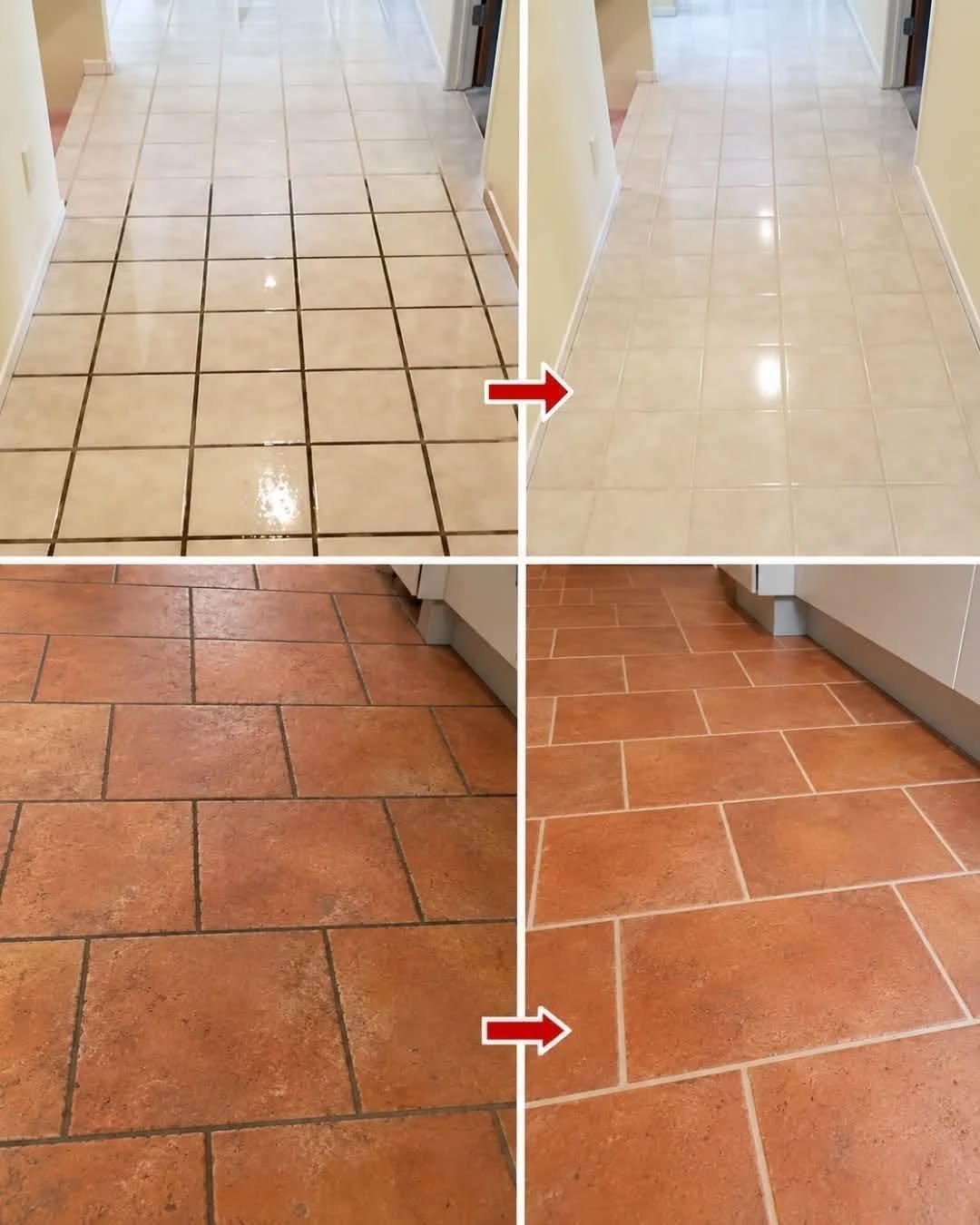
You can mop your floors every week, use your favorite cleaning products, and still end up with grout lines that look gray, brown, or almost black. It’s frustrating, especially when the rest of your floor looks perfectly clean.
The truth is, tile grout is one of the easiest places for dirt to hide. Unlike the smooth surface of a tile, grout is porous and can gradually absorb grime, soap residue, grease, and moisture. Over time, those narrow lines between your tiles can make an entire kitchen or bathroom look older and dirtier than it really is.
But before reaching for harsh chemicals or spending money on expensive cleaning products, there are a few simple methods worth trying.
With the right approach, you may be able to lift everyday stains and give your grout a noticeably cleaner appearance using products you already have at home.
Here are three methods to consider, along with a few important precautions to protect your floors.
1. Baking Soda: A Simple First Step for Everyday Grime
If your grout looks dull from ordinary household dirt, baking soda is a good place to start.
Its mild abrasive texture can help loosen surface grime without requiring specialized equipment. It’s particularly useful when the discoloration isn’t too deep.
What you’ll need:
- Baking soda
- A little water
- An old toothbrush or small grout brush
- A clean cloth
- Warm water for rinsing
How to clean your grout:
- Mix baking soda with a small amount of water until it forms a thick paste.
- Apply the paste directly to the dirty grout lines.
- Let it sit for about five minutes.
- Gently scrub with an old toothbrush, using small back-and-forth movements.
- Wipe away the residue and rinse the area with clean water.
- Dry the surface with a clean cloth.
A helpful tip: Avoid scrubbing too aggressively, especially if your grout is old, cracked, or already showing signs of wear. Gentle, consistent brushing is usually a better approach than applying too much pressure.
For lightly soiled grout, this simple method may be enough to make a visible difference.
2. Hydrogen Peroxide: An Option for More Stubborn Stains
Sometimes, baking soda alone isn’t enough. If your grout still looks discolored after a regular cleaning, hydrogen peroxide may be another option.
However, not every product is suitable for every type of tile or grout. Always choose a product labeled for the intended cleaning use and follow the manufacturer’s directions.
Before applying it:
- Test the product on a small, inconspicuous area first.
- Check that it is compatible with your tile and grout.
- Wear protective gloves.
- Keep the room well ventilated.
- Follow the recommended contact time and rinse if the product instructions require it.
Never assume that leaving a cleaning product on the surface longer will produce better results. Doing so could damage certain materials or finishes.
One important warning: Never mix hydrogen peroxide with other household cleaners unless the product manufacturer specifically confirms that the combination is safe. Using one product at a time is the safest approach.
3. White Vinegar: Useful for Mineral Deposits, but Not Every Floor
For Complete Cooking STEPS Please Head On Over To Next Page Or Open button (>)