Have you ever walked into a room and felt that something was missing, even though everything looked clean and tidy? Sometimes, the difference isn’t a new piece of furniture or a fresh coat of paint. It’s simply a little greenery.
Indoor air can contain a variety of substances released by everyday household items, including cleaning products, furniture, paints, and building materials. While opening windows and maintaining good ventilation are important, adding a few houseplants can make your home feel fresher, warmer, and more welcoming.
You may have heard that certain plants can help remove pollutants from the air. Research conducted in laboratory settings has shown that some houseplants can absorb certain airborne compounds. However, that doesn’t mean a few pots can completely purify the air in an entire home.
Still, houseplants offer plenty of reasons to bring them indoors. They add natural beauty, soften a room’s appearance, and can make even a small space feel more inviting.
If you’re looking for attractive plants that don’t require hours of care, here are three varieties worth considering: the snake plant, pothos, and spider plant.
1. Snake Plant: The Low-Maintenance Houseplant That Thrives on Neglect
<italic>Sansevieria trifasciata</italic>, commonly known as the snake plant or mother-in-law’s tongue, is one of the easiest houseplants to recognize.
Its tall, upright leaves create a clean, architectural look that works beautifully in modern homes, cozy bedrooms, and home offices. It’s also a favorite among people who love greenery but don’t always remember to water their plants.
One interesting feature of the snake plant is the way it handles gas exchange. Unlike most plants, it uses a process called Crassulacean Acid Metabolism (CAM), allowing it to take in carbon dioxide at night under suitable conditions.
Snake plants have also been studied for their ability to absorb certain volatile organic compounds, including formaldehyde, benzene, and trichloroethylene, in controlled laboratory environments.
Where Should You Place a Snake Plant?
One of the best things about this plant is its adaptability. It can tolerate lower-light conditions, although bright, indirect light generally helps it grow better.
Try placing it in:
- A bedroom corner where you want a touch of greenery.
- A living room beside a sofa or decorative cabinet.
- A home office to add a natural element to your workspace.
- An entryway with suitable indirect light.
Simple snake plant care tips:
- Place it in bright, indirect light when possible.
- Allow the soil to dry out completely between waterings.
- Choose a pot with drainage holes.
- Never let the roots sit in standing water.
- Water less frequently during the winter months.
One important thing to remember: snake plants are toxic to cats and dogs if eaten. If you have pets that like chewing on leaves, keep this plant somewhere they cannot reach.
2. Pothos: The Beautiful Trailing Plant That Brightens Any Room
<italic>Epipremnum aureum</italic>, better known as pothos or devil’s ivy, is a popular indoor plant for a good reason.
Its heart-shaped leaves, often decorated with beautiful green, yellow, or cream patterns, can instantly make a room feel more inviting. As the stems grow longer, they naturally cascade over shelves, furniture, and hanging baskets.
Pothos is also relatively forgiving. It can tolerate moderate indoor lighting and doesn’t demand constant attention, making it a great choice for beginners.
In controlled laboratory studies, pothos has demonstrated the ability to absorb certain airborne compounds, including benzene, formaldehyde, and trichloroethylene.
But its biggest everyday advantage may simply be how easy it is to grow and display.
How to Care for Pothos
Pothos looks especially attractive on a high shelf or in a hanging planter where its trailing stems have room to grow.
To keep yours healthy:
- Choose a spot with bright, indirect light.
- Water when the top portion of the soil begins to dry.
- Avoid leaving excess water in the saucer.
- Trim overly long stems to maintain the shape you like.
- Wipe the leaves occasionally with a soft, slightly damp cloth to remove dust.
You can also propagate pothos by taking stem cuttings and placing them in water until roots develop. It’s a simple way to grow new plants without buying more.
A safety note for pet owners: Pothos contains insoluble calcium oxalate crystals and is toxic to cats and dogs if chewed or swallowed. Keep it well out of their reach.
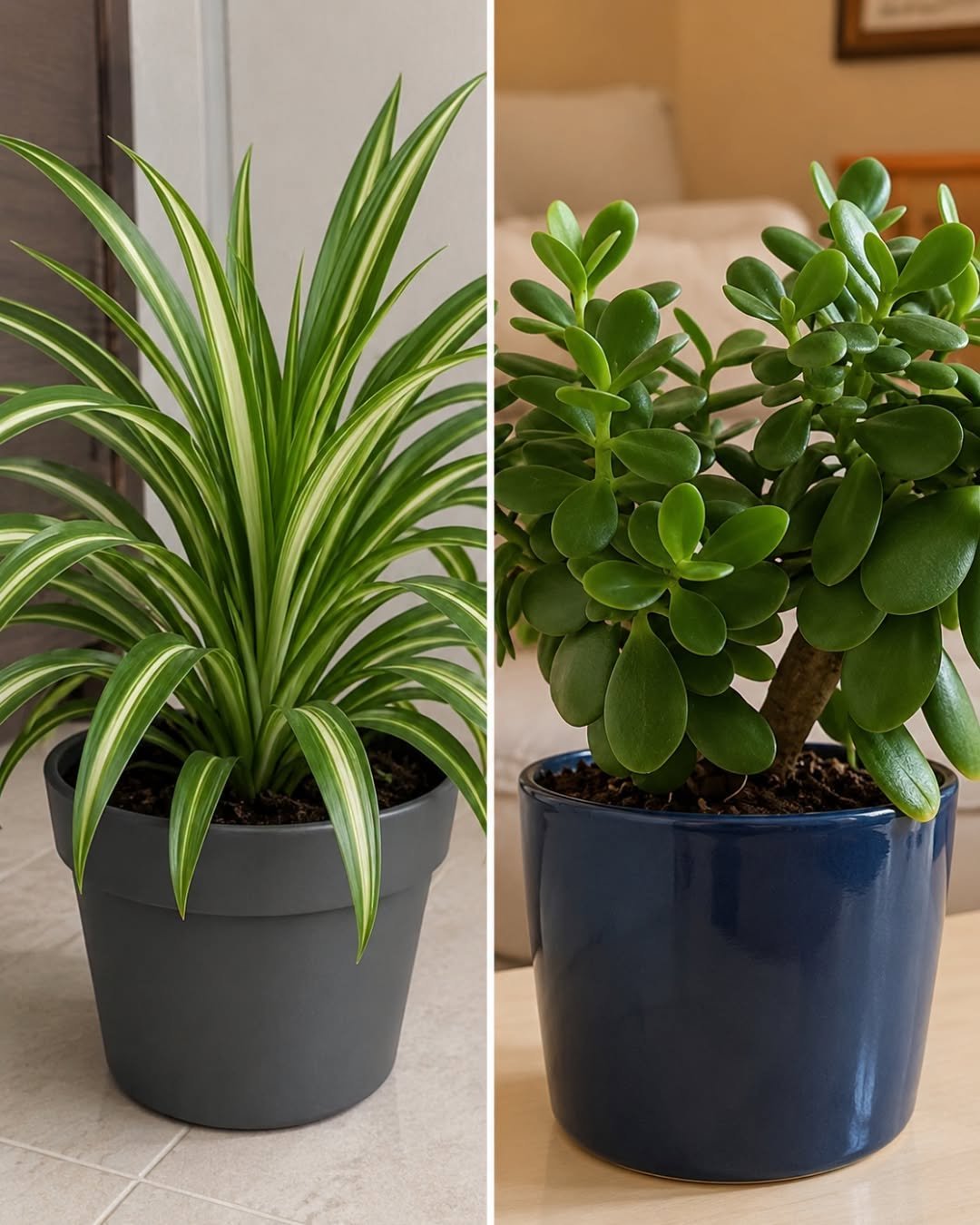
3. Spider Plant: An Easy-Care Favorite With Plenty of Personality
For Complete Cooking STEPS Please Head On Over To Next Page Or Open button (>)